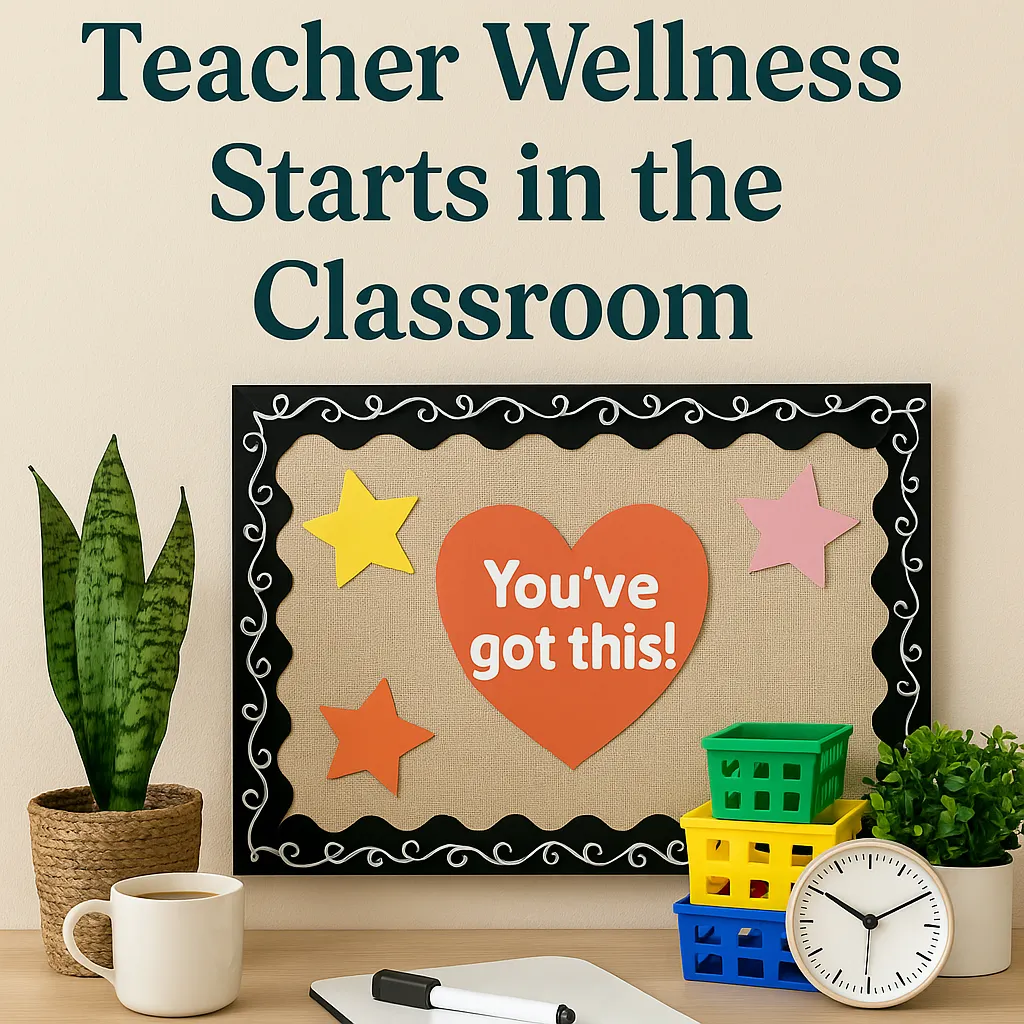
Teacher Wellness Starts in the Classroom
Teaching is a calling, but it’s also one of the most demanding professions. Between lesson planning, grading, meetings, and keeping a classroom running smoothly, teachers often find themselves stretched thin. While self-care outside of school is important, many educators overlook one powerful factor in their well-being: the classroom itself.
Your environment shapes your mood, energy, and sense of calm. A cluttered, chaotic space can fuel stress, while an organized and thoughtfully decorated classroom can make each day feel more manageable — even joyful. At Teacher’s Touch, we believe that teacher wellness starts in the classroom. By using décor, organization, and environment strategically, you can create a space that nurtures not only your students but also you.
Here’s how to make it happen.
1. The Link Between Environment and Teacher Wellness
Studies show that our surroundings directly impact our mental health. Just as a messy home can feel overwhelming, a disorganized classroom can weigh heavily on your mind. On the flip side, a space that feels intentional, tidy, and welcoming provides a sense of control and calm.
For teachers, that calm is priceless. A visually cohesive classroom helps reduce decision fatigue, makes transitions smoother, and even influences student behavior. When your classroom feels peaceful and functional, stress levels drop — and everyone benefits.
Hack: At the end of each week, take five minutes to walk your classroom as if you’re seeing it for the first time. Ask yourself: “Does this space calm me, or does it drain me?” Adjust one small thing each week.
2. Décor That Lifts Your Mood
Classroom décor isn’t just for students. It has a huge impact on how you feel too. Imagine walking into a room filled with warm fall borders, cheerful posters, and cozy accents versus one with blank walls and mismatched clutter. Which would give you more energy?
Tips for Mood-Lifting Décor:
Choose calming or joyful colors: Soft blues and greens promote calm, while pops of yellow and orange bring energy.
Seasonal swaps: Rotate décor for the seasons (pumpkins in fall, snowflakes in winter, flowers in spring). It keeps the space fresh without requiring a full makeover.
Positive affirmations: Hang posters with messages like “You’ve Got This” or “Progress, Not Perfection.” They’re reminders for both students and you.
A teacher-only touch: Add one item at your desk that sparks joy just for you — a photo, plant, or favorite quote.
Hack: Use bulletin board quick kits. They’re coordinated, easy to swap out, and instantly refresh your classroom without extra stress.
3. Organization = Peace of Mind
Clutter is one of the biggest sources of classroom stress. Piles of papers, scattered supplies, and disorganized stations make it harder to focus — and easier to feel overwhelmed.
Organization Strategies That Work:
Bins and labels: Assign every item a home. Color-coded bins and magnetic labels make finding supplies fast and cleanup easy for students.
Daily reset routine: Spend five minutes at the end of each day tidying your desk and resetting student areas. Tomorrow-you will be grateful.
Simplify paperwork: Use folders or trays labeled “To Grade,” “To Copy,” and “To File” so papers don’t pile up.
Declutter often: If you haven’t used it in six months, store it or let it go.
Hack: Create a “Friday Reset” checklist. Restock supplies, tidy the board, and prep Monday’s essentials so you can leave for the weekend without lingering stress.
4. Creating a Functional Flow
How your classroom is arranged plays a huge role in your stress levels. Constant bottlenecks, unclear traffic flow, or supplies stored out of reach create daily friction.
Tips for Functional Flow:
Desk placement: Position your desk where you can see the whole room without needing to hover.
Supply stations: Keep essentials (like pencils, markers, and paper) within easy student reach to reduce interruptions.
Quiet corners: Create a small “calm down space” for students. It helps them self-regulate — and saves you from constant redirection.
Clear pathways: Ensure students can move smoothly between stations.
Hack: Use painter’s tape or colorful floor dots to guide traffic patterns. It’s simple but reduces chaos instantly.
5. Sensory Elements That Calm
Small sensory changes can transform your classroom atmosphere. Harsh fluorescent lights and bare walls can feel sterile, but cozy textures and natural elements create warmth.
Soothing Additions to Try:
Soft lighting: Use lamps, string lights, or light filters to reduce glare.
Plants: Real or artificial, greenery adds life and calm to your space.
Textures: Add a cozy rug in the reading corner or fabric backdrops for bulletin boards.
Background sound: Play calming instrumental music during independent work.
Hack: Keep a small diffuser or wax warmer at your desk (if permitted). Scents like lavender or citrus can lower stress levels.
6. Building in Teacher Comfort
It’s easy to focus on student needs and forget your own. But your comfort matters too. Small touches at your desk can make long days more bearable.
Comfort Boosters:
A supportive chair cushion or footrest.
A wellness drawer with tea bags, hand lotion, or a stress ball.
A personal water bottle or coffee mug to encourage hydration.
A notepad for jotting positive moments or gratitude notes.
Hack: Set up a “teacher survival kit” basket. Stock it with pens you love, snacks, sticky notes, and other essentials that make your day easier.
7. Time-Saving Classroom Systems
Nothing drains teacher wellness like the feeling of never having enough time. Systems and routines help lighten the load.
Time-Savers That Reduce Stress:
Bulletin board quick kits: Less time decorating, more time teaching (or resting!).
Ready-to-go centers: Keep math or reading stations prepped in labeled bins so you’re not scrambling.
Batch prep: Use Fridays to prep materials for the following week. Monday mornings become smoother.
Student jobs: Assign roles like “Supply Monitor” or “Board Eraser” to share the workload.
Hack: Use dry-erase sleeves for reusable worksheets. Saves paper and prep time.
8. Community Support in the Classroom
Wellness isn’t just about what you do alone — it’s also about leaning on support systems.
Ways to Share the Load:
Involve students: Assign classroom responsibilities so upkeep isn’t all on you.
Encourage ownership: Let students help decorate bulletin boards or organize supplies. It builds pride and lightens your work.
Ask the experts: Teacher’s Touch staff are always ready to recommend the tools or décor that work best. Think of them as your classroom support team.
Hack: Make setup a group activity. Give students a theme or project (like designing a gratitude board) so they feel involved — and you feel less pressure.
Conclusion: Wellness is Not a Luxury
Teacher wellness isn’t an optional extra. It’s essential for you, your students, and the long-term sustainability of your career. The good news? By making simple changes to décor, organization, and classroom environment, you can reduce stress and create a space that supports you every single day.
From quick seasonal swaps to storage hacks and wellness corners, your classroom can become more than a place of learning — it can be a sanctuary of calm and inspiration.
Ready to take the first step? Visit Teacher’s Touch to find the décor, storage solutions, and thoughtful touches that make your classroom a place where both teachers and students thrive.
